Router Brands – Find Your Router Login, IP Address and Settings
Different router brands use different admin pages, setup methods, default IP addresses and firmware layouts. Two routers can do the same basic job but still look completely different when you open their settings.
- 1Connect your phone or computer to the router.
- 2Type your router IP, like
192.168.1.1, into the browser. - 3Enter the administrator username and password.
Brands like TP-Link, NETGEAR, ASUS, D-Link, Linksys, Huawei, ZTE, Tenda and Xiaomi are often used in homes, offices and ISP installations. However the brand name alone does not tell you the exact router login address or administrator password.
The best way is to figure out the brand and model then look at the router label, network gateway or official instructions for that specific device.
Why Router Brands Matter
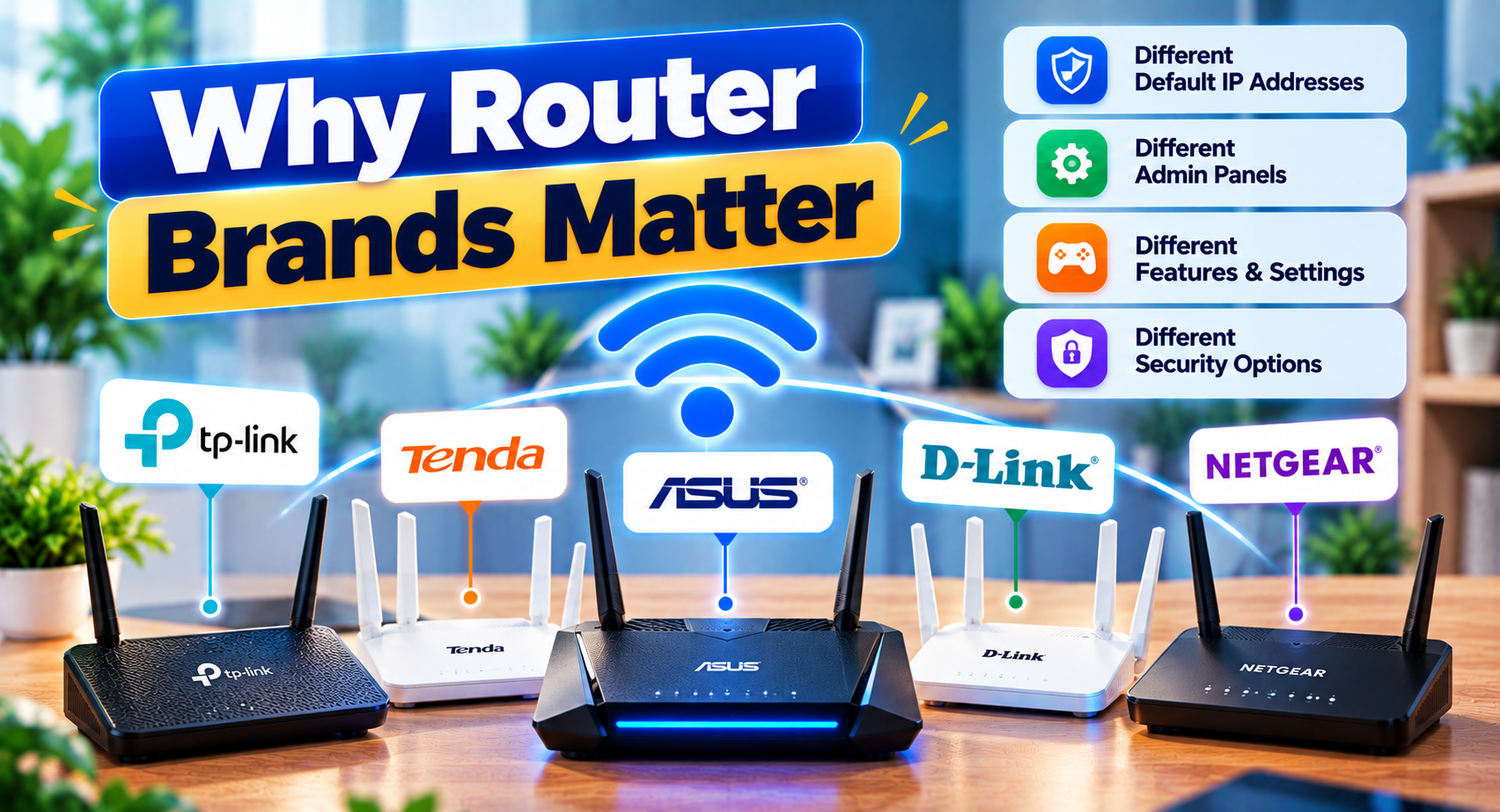
A router brand usually decides the look of the admin panel, the names used for settings and how the device is set up.
For instance one router might call its wireless section WiFi while another uses Wireless or WLAN.
The same is true for settings like:
- Guest network
- Parental controls
- DHCP
- DNS
- Firmware updates
- Access control
- Port forwarding
- WAN settings
This is why instructions for one of the router brands below may not match another exactly.
Popular Router Brands
Here are some of the brands people often come across.
TP-Link
TP-Link makes home routers, mesh systems, access points and other networking equipment.
Depending on the model and how it is set up a TP-Link router might use an IP address or a local setup hostname.
Do not assume every TP-Link router uses 192.168.1.1. Some models or networks might use a different gateway.
If the login page does not show up, look at the router label or your device’s default gateway.
NETGEAR
NETGEAR routers are common in home networks and small offices.
Their admin interface can offer settings for WiFi, connected devices, guest networks, security and firmware.
Like other companies, the right login method depends on the router model and how it is set up.
ASUS
ASUS offers WiFi routers, gaming routers and mesh systems.
Its firmware often has many features, but the exact menu layout can be different between models.
Users should not change options just because they are in a tutorial for another ASUS device.
D-Link
D-Link has been making routers, switches, access points and other networking hardware for years.
A D-Link router might use a common private IP, but the default address can be different.
Checking the device label is usually faster than trying addresses from memory.
Linksys
Linksys routers are often found in homes and offices.
Older and newer Linksys devices can have different setup interfaces so instructions specific to the model are useful when making changes.
Huawei
Huawei equipment is often used for broadband, fiber and mobile internet connections.
Some Huawei routers and ONTs are given directly by internet providers.
In those cases the ISP may change the login address, username, password or available settings.
ZTE
ZTE routers, modems and ONTs are also common in ISP setups.
A search such as 192.168.1.1 ZTE may work for some devices. The real address depends on the model and the provider setup.
Always check the gateway before assuming a login problem is because of the router.
Tenda
Tenda makes budget-friendly home routers, repeaters and mesh devices.
The login interface is generally used for network management, but the available features can differ between models.
Xiaomi
Xiaomi routers might rely on an app-based setup process more than traditional router brands.
Some models are made to work with mobile apps or local setup pages.
The login method should be confirmed using the model details.
How to Find Your Router Brand
If you are not sure which router you have, look at the device.
On most router brands, the brand name is printed on:
- The front of the router
- The top panel
- The back
- The bottom label
The same label usually has the model number.
The model number is important because two routers from the same brand can use different firmware, login addresses and setup steps.
How to Find the Right Router Login Address
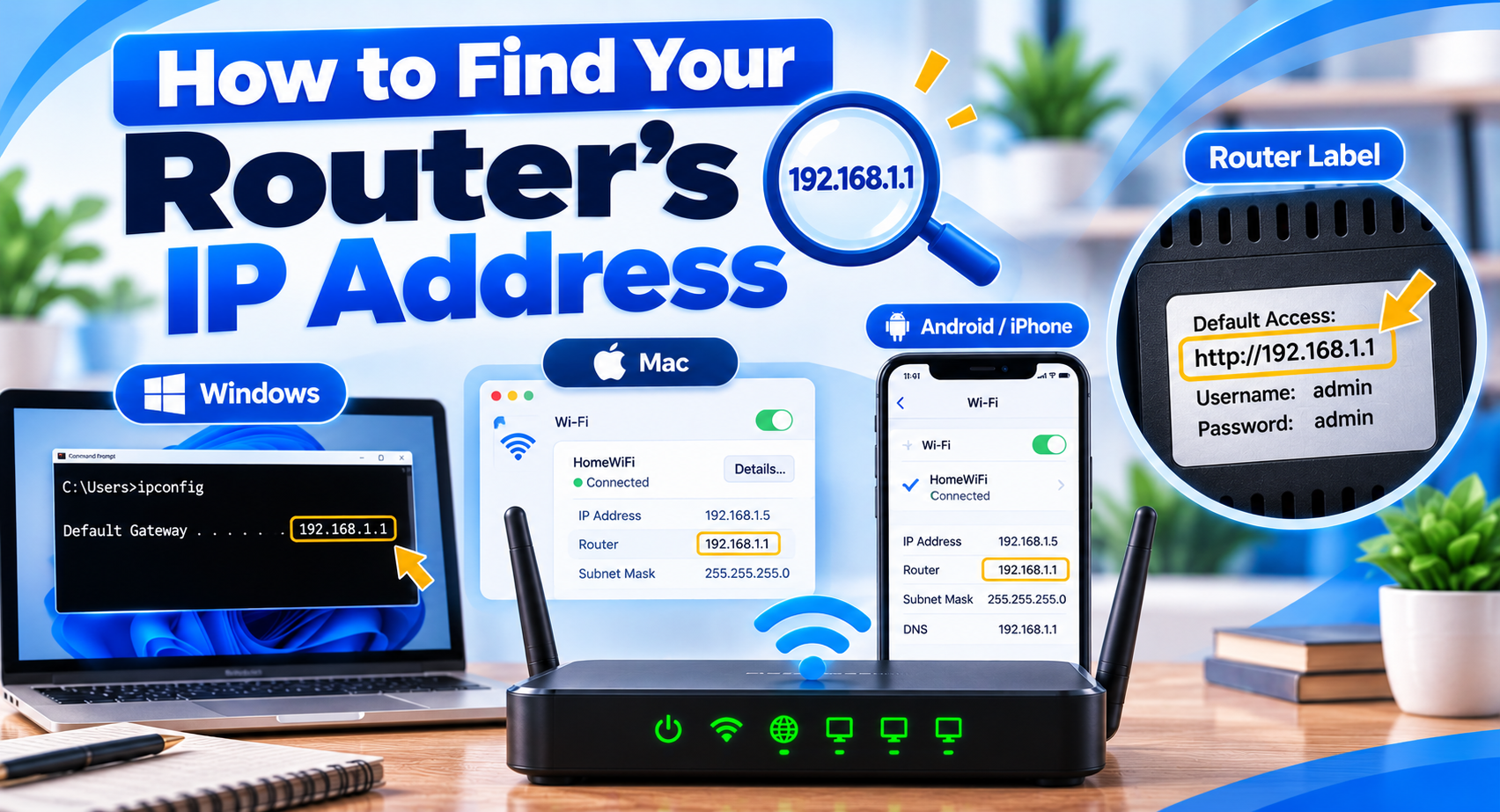
The router login IP is the address you type into the browser to open the admin page.
Knowing the brand helps, but the network gateway gives more accurate information.
If the router label does not show the login address clearly check the gateway on your device.
Common router IP addresses include:
These are only examples.
The correct one is the one actually assigned to your router.
Windows
Look for Default Gateway in your network details.
Android
Open the WiFi network and check for Gateway or Router info.
iPhone or iPad
Open WiFi settings, select the network and look for the Router field.
macOS
Check the router or gateway information for your active network connection.
Router Brand Does Not Mean a Default Password
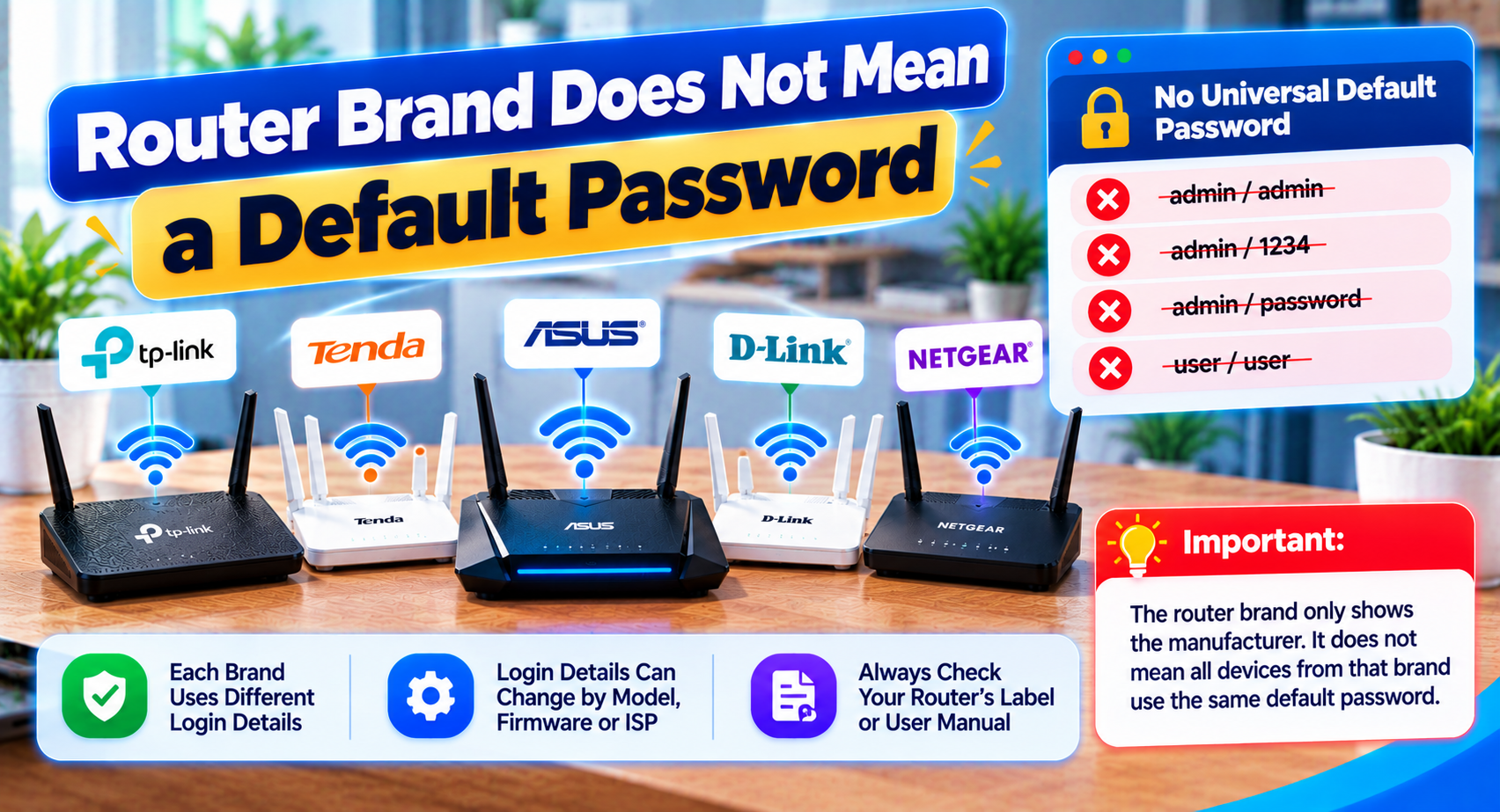
One mistake people often make is searching for a password based on router brands alone.
For example, two routers from the same company may not use the same administrator credentials.
The login can be different because of:
- Router model
- Firmware version
- ISP changes
- Custom setup
- Password printed on the device
- Password created during first setup
That is why it is better to check the router label or official instructions instead of relying on a general password list.
ISP-Supplied Routers Can Be Different
A router from an internet company can act differently than a retail version of the same brand.
The ISP may change:
Some settings might even be limited to stop changes to the internet connection.
If you have an ISP-supplied router, instructions from the provider may be more accurate than brand instructions.
What Settings Are Common Across Router Brands?
Even if the interfaces are different most router brands offer basic functions.
You may find options for:
- Changing WiFi name
- Updating WiFi password
- Checking connected devices
- Guest WiFi
- DHCP
- DNS
- LAN settings
- WAN settings
- Parental controls
- Firmware updates
The names and places of these settings can be very different.
If a tutorial says to open a menu that’s not on your router look for a similar term instead of thinking the feature is missing.
Router Brand Login Not Working?
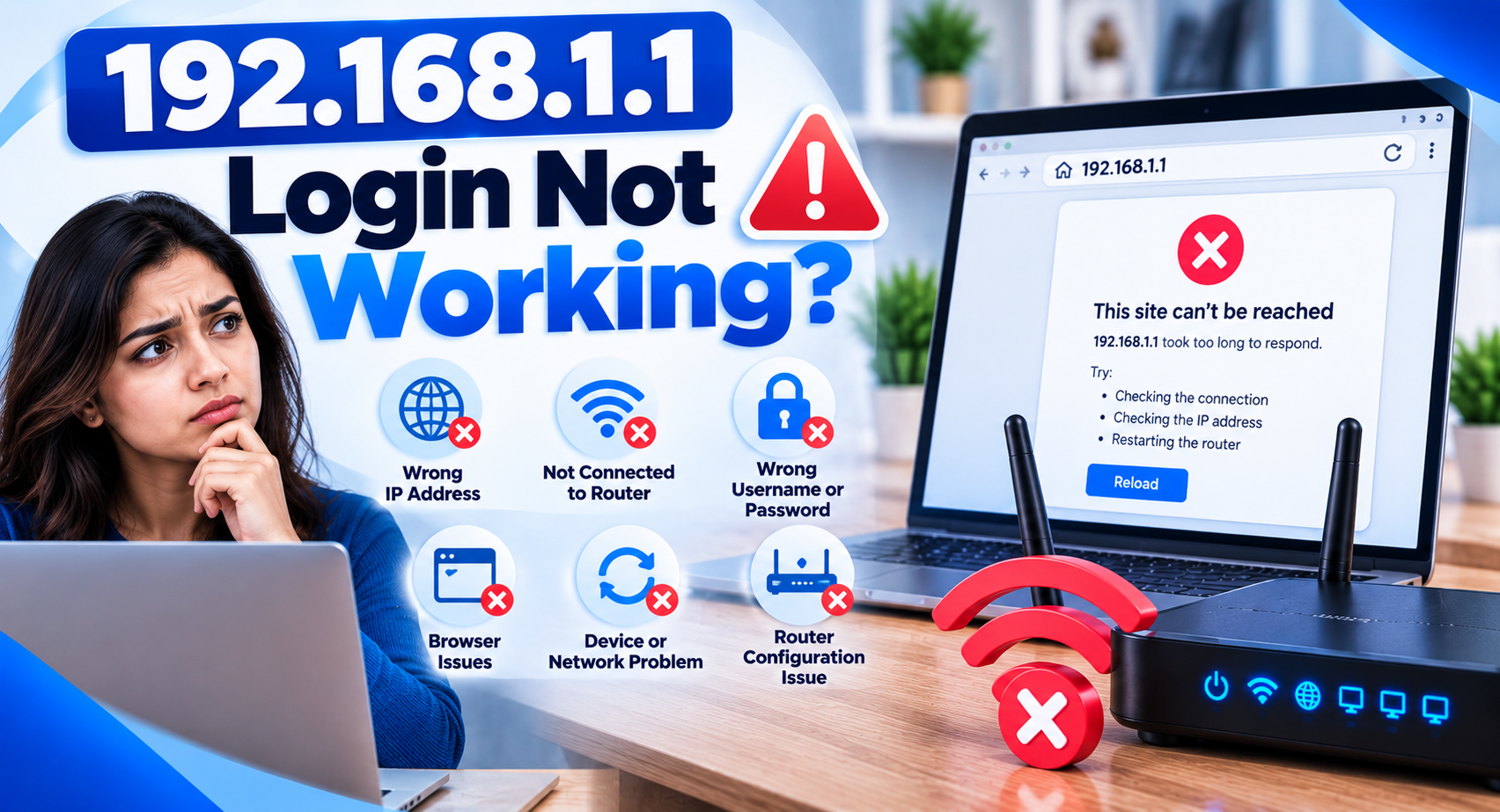
If you know the router brand but can’t open the admin page go through the basics.
First make sure your phone or computer is connected to that router.
Then check the gateway instead of relying on a common IP linked to the brand. Router brand login pages only open when you use the address your router actually uses.
If the login page opens but the password doesn’t work the issue is probably with the credentials, not the IP address.
Try not to do a factory reset until you have checked the router label, instructions and ISP details.
Frequently Asked Questions
Which router brand uses 192.168.1.1?
Many router brands can use 192.168.1.1. This address is not only for one company.
Do all TP-Link routers use the same IP?
No. The router address can be different based on the model and setup.
Can Huawei and ZTE routers use 192.168.1.1?
Some Huawei and ZTE devices can use this address. ISP settings and hardware models may change the gateway.
Do all routers from one brand have the same password?
No. The login details can be different between models and may be changed during setup.
How do I find out my router brand and model?
Check the label on the router. It usually shows the manufacturer and model number.
Should I reset the router if I can’t find the login?
Not right away. Check the model, gateway and instructions first.
Final Words
Router brands can help you know what type of admin interface and setup process to expect. The brand name should not be taken as a promise of a specific IP address or password.
Find the model, check the router’s current gateway and use the login info for that device. This is more reliable than guessing based on the brand.